The macro landscape is painting a fascinating picture of the inflationary environment, especially when we dive deep into the underlying narratives. The NBER folks help us get a more precise picture of what caused inflation. They concluded the following:
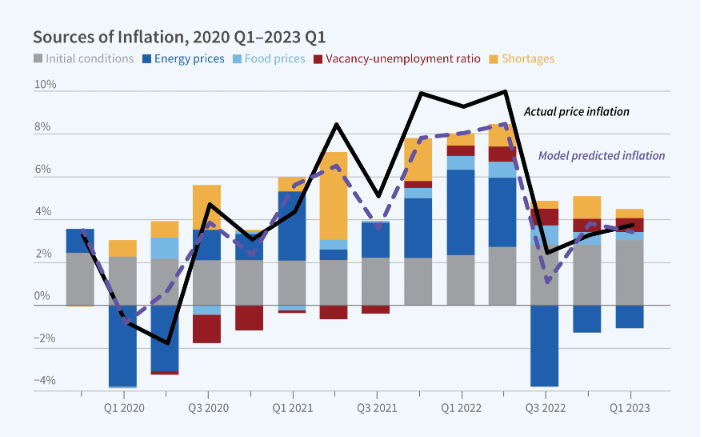
1. First, let’s not underestimate the magnitude of the U.S.’s fiscal response to the pandemic. With behemoths like the CARES Act and the American Rescue Plan, we’re talking about an astonishing $5 trillion injection into the economy. That’s a tidal wave of liquidity, and it unsurprisingly bolstered both consumer and business sentiment and demand. The sheer scale of this is hard to fathom.
2. Couple that fiscal surge with an almost surreal tightening of labor markets. Suddenly, there are more vacancies than there are people to fill them. And in this world, wages aren’t just creeping up; they’re surging, adding fuel to the inflationary fire.
3. Commodity prices aren’t sitting this dance out either. Their ascent, especially during such a fragile economic period, has been nothing short of meteoric, pushing the inflation envelope even further.
4. The stories of supply chain disruptions have become almost legendary now. It’s more than just about computer chips and cars. It’s emblematic of a global supply chain teetering on the edge, and every small misstep has reverberations in the price structures.
5. Now, add to this cocktail the escalation in durable goods’ prices. A car isn’t just a car anymore; it’s a symbol of the dichotomy between relentless demand and a choked supply.
6. Energy and food, the very lifeblood of economies, haven’t been spared either. The geopolitical chess, especially with Russia’s moves in Ukraine, has thrown the oil markets into turmoil, rippling out to touch every facet of the industrial world.
Now, here’s the kicker: The Monetary Largesse of Central Banks. As central banks globally have embarked on an unprecedented spree of money printing, this monetary largesse, combined with the fiscal side, is creating a potent brew. It’s not just a double whammy; it’s a synchronized tidal wave of liquidity. The lines between monetary and fiscal policies have blurred, creating an environment that’s ripe for unexpected consequences.
What Can We Expect Going Forward? Given this backdrop, the path forward is murky at best. While initial inflation drivers like energy prices and supply shortages might ease, the structural shifts, especially in labor markets and the lingering effects of central bank policies, could make inflation stickier than many anticipate (including me). In this uncharted territory, one thing is certain: volatility is not just a possibility; it’s a guarantee. Expect more twists and turns in this saga.




 Investment Gems
Leave a comment