
Tesla is working on something it’s calling the “unboxed” manufacturing process, and it’s not just a tweak—it’s a complete rethink of how cars get built. Instead of the traditional method where vehicles are assembled piece by piece along a big moving line, Tesla’s trying to build major sections—like the front, rear, cabin, and underbody—in parallel. Once those big pieces are done, they snap them together at the end to create a finished car. It sounds a little like putting together giant Lego bricks, and it totally flips the way factories are usually designed.
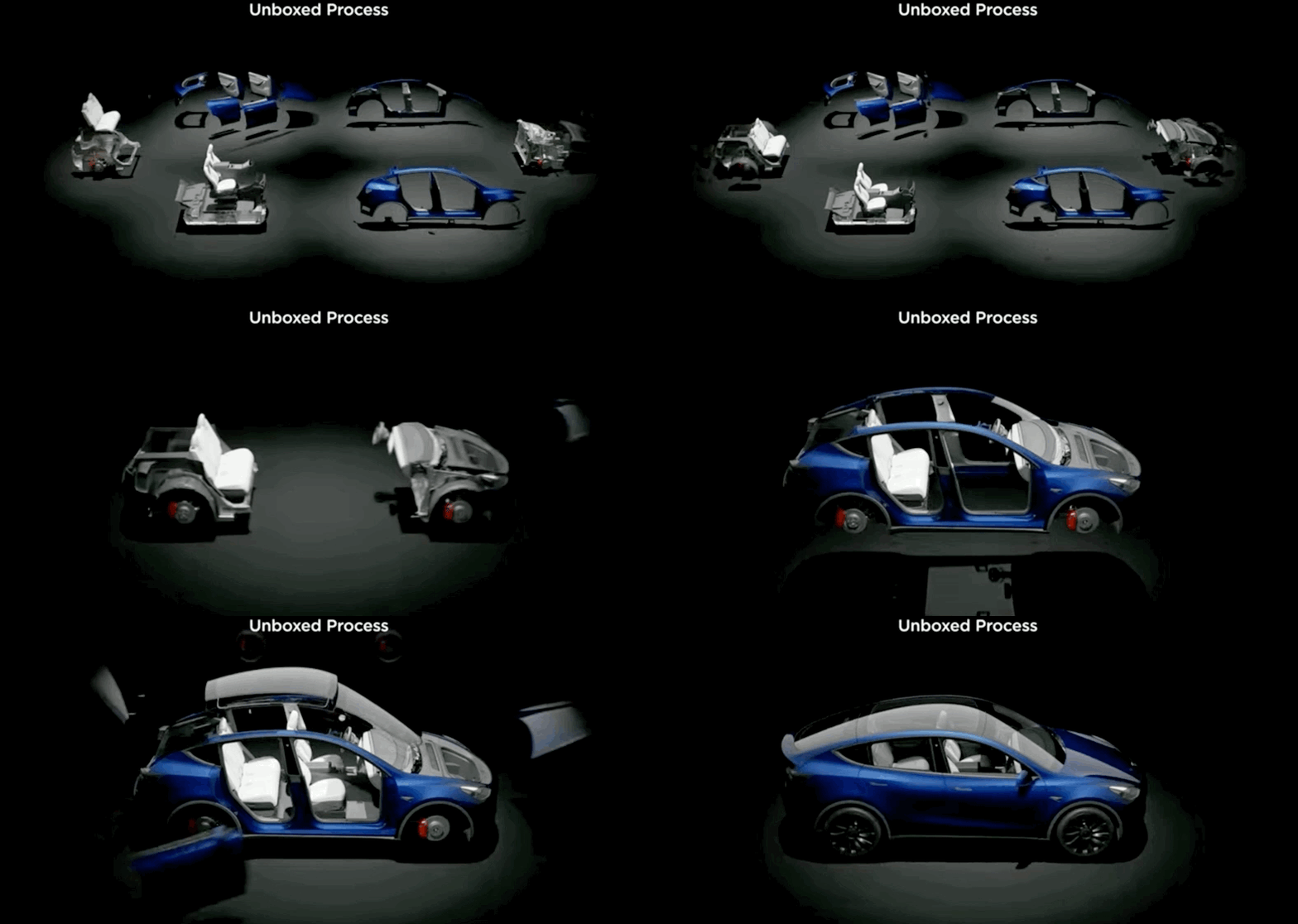
Source: electrek
Why does this matter? If it works, Tesla could build cars a lot faster—Elon Musk has talked about cutting the production time down to one vehicle every five seconds, compared to one every 33 seconds at their current best-performing plant in Shanghai. That’s a massive leap. This new approach could also reduce the amount of factory space needed, simplify logistics, make robots more efficient, and maybe even improve working conditions. It could also be the key to getting that sub-$25,000 Tesla on the road while still making money on it, which no one else in the EV space has pulled off yet.
But here’s the thing—it’s not happening anytime soon. As of now, none of Tesla’s current models are using the unboxed process. Not the Model 3, not the Cybertruck, not anything you can buy today. The first car that’s supposed to be built this way is something called the Cybercab, a robotaxi concept that’s still in the development phase. Tesla is in what they call B-sample testing right now, which basically means they’re still ironing things out. Actual production isn’t expected until 2026, and even then, it’ll start slow. A few thousand units to begin with—nowhere near full scale.
And to be honest, this isn’t just a matter of changing how cars get bolted together. It requires new supply chains, different tooling, custom-built robots, and a rethinking of the entire assembly flow. Musk himself said it’s like designing the train while laying the tracks. It’s ambitious, yes, but also risky. There’s no guarantee they’ll pull it off smoothly.
If they do, though, the upside is huge. It could drop the cost of each vehicle by thousands, make autonomous fleets a real possibility, and give Tesla yet another lead over traditional automakers. But like with SpaceX or Tesla’s early days, this is a long-game move. It won’t impact 2025 numbers, and probably not even early 2026 in a big way. But by 2027 or 2028? If the system works and scales, this might be how most EVs get built in the next decade.




 Investment Gems
Leave a comment