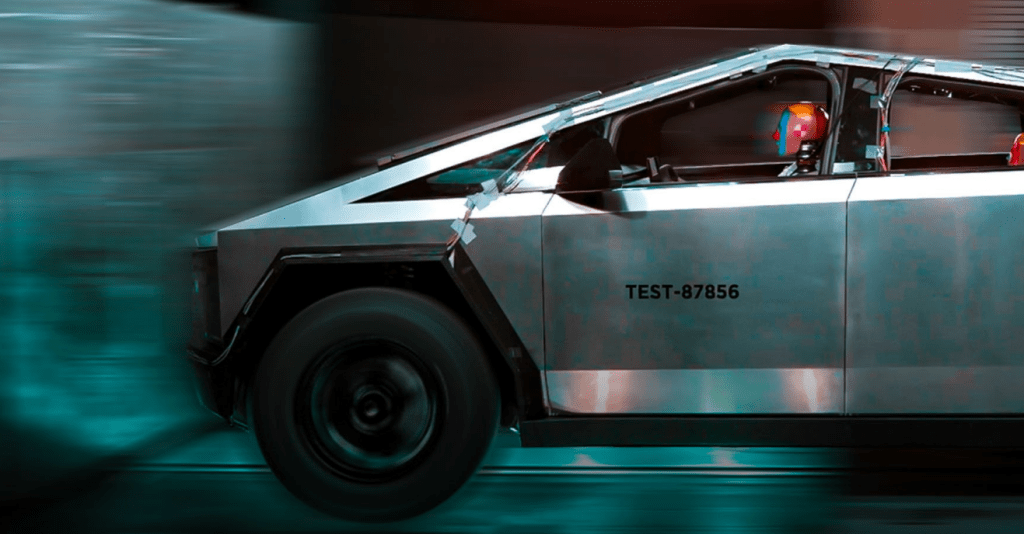
After digging through Tesla’s Q1 2025 earnings call, a few things stand out. The company’s got multiple levers to pull, but not all of them kick in right away. Some drivers are already live, others are still on the runway, and a few are probably years from showing up in the numbers. Here’s a look at what’s moving the needle in the short term, what’s in the pipeline for the next 18 months, and what might matter further out—if it works.
Short-Term: Model Y, Cheap Cars, FSD, and Energy Are Doing the Heavy Lifting
In the next couple quarters (Q2 and Q3), most of Tesla’s revenue growth is coming from things it’s already executing. The global Model Y refresh just wrapped in Q1, and it looks like demand—especially in Asia—is picking up again. Q1 deliveries were down 13% year over year, so any bounce from the updated Model Y is going to help shore up that weakness.
Tesla’s also planning to launch more affordable variants using existing production lines. These aren’t the fabled next-gen cars with radical cost savings, but they do hit lower price points without the company needing to pour more money into new factories. That’s a win from a capital efficiency standpoint.
Full Self Driving (FSD) is starting to matter a bit more. Adoption is up, thanks to performance gains and fewer driver interventions. The current price—$99/month—is arguably too low for what the system can now do. Tesla will probably revisit pricing soon, maybe even introduce tiers.
On the energy side, things are really moving. Powerwall 3 crossed the 1 GWh mark last quarter, and Megapack deployments—especially out of the Shanghai Megafactory—are ramping hard. Energy revenue grew 67% year-over-year in Q1, and margins are improving. Meanwhile, services like supercharging and collision repair are quietly adding up. Tesla handled 42 million charging sessions in Q1 alone, and gross profit from this segment jumped 25%.
Mid-Term: Robotaxi Rollout, Cybercab, and the Optimus Experiment
If you zoom out to the next 18 months, the picture shifts. Tesla is aiming to pilot a robotaxi program in Austin this June, using unsupervised Model Ys for real paid rides. If that goes well, they want to expand to more cities by the end of the year and scale up in 2026. That’s a big shift—from car company to mobility platform—and it’s one of the most aggressive bets they’ve made.
Then there’s the Cybercab. This is Tesla’s first purpose-built robotaxi, designed from the ground up to be cheap, fast to build, and fully autonomous. It’ll be assembled using the new “unboxed” method, which should slash costs and cut production time dramatically. Volume production is expected in 2026. If it hits, it could change Tesla’s economics overnight.
Also coming into view is the Optimus robot project. The plan is to have thousands of these humanoid bots working in Tesla’s own factories by the end of 2025, with commercial use cases not far behind. If that happens, it opens up a whole new revenue model—robotics-as-a-service, or something like it. Still a moonshot, but it’s being taken seriously.
Finally, U.S. battery materials. Tesla is spinning up a lithium refinery in Texas and a cathode facility in Austin. This should help with cost, cut reliance on foreign supply chains, and allow Tesla to build batteries cheaper and faster—without trade barriers getting in the way.
Long-Term: Full Autonomy, Industrial Bots, and Energy at Grid Scale
Further out, starting in 2027 and beyond, Tesla’s bigger ideas start to come into play. Once full autonomy scales across millions of vehicles, there’s serious money on the table—not just from FSD subscriptions, but from ride-hailing networks, in-app services, and maybe even data monetization. Tesla would no longer just sell cars—it would run an AI-powered transportation platform.
Optimus could be even bigger. Tesla’s talked about hitting 1 million units a year by 2029. If that even comes close, and if the bots can work reliably in warehouses, factories, and hospitals, it could crack open a trillion-dollar market. No one knows if it’ll pan out, but the upside is hard to ignore.
Tesla Energy might also become a core business in its own right. AI infrastructure is power-hungry, and grid-level energy storage is increasingly vital. Tesla’s Megafactory in Shanghai could hit 40 GWh per year, and the company is already talking about scaling toward terawatt-hour capacity. If that plays out, energy could rival vehicles as a revenue stream.
And then there’s unboxed manufacturing. This one’s a slow burn. It won’t affect numbers in 2025, but if Tesla figures it out and uses it to mass-produce cars like Cybercab, it could become one of the company’s biggest long-term cost and scale advantages.
Part II – Reconciling Narrative With Estimates
Tesla’s roadmap from now through the end of the decade is one of the most ambitious in the tech and automotive world. The previous paragraphs show that it’s clear that the next few years will be defined by product launches, manufacturing transitions, and entirely new business models. But how much of this is actually priced in? And what’s reasonable to expect from 2025 to 2031?

Source: Seeking Alpha
2025: Flat Revenue Outlook Masks Potential Upside in Key Segments
Consensus currently expects Tesla’s revenue to grow just 0.37% in 2025—a signal that analysts are approaching this year with caution. That view reflects several near-term challenges: softening global demand, controversy around the Tesla brand, increased tariff risk (especially in Europe and China), and delays in executing on next-gen manufacturing. In other words, the market is in wait-and-see mode.
But Tesla itself has framed 2025 as a pivotal year. The company plans to roll out more affordable EVs using its existing lines starting mid-year, and a limited robotaxi pilot is slated to begin in Austin by June. Meanwhile, energy storage—particularly Megapack and Powerwall 3—continues to scale and already posted a record gross profit in Q1.
The flat forecast might not fully reflect short-term upside from a few key areas. The Model Y refresh is showing early signs of a rebound, and improved FSD software is likely to boost $99/month subscription uptake. On top of that, energy deployments continue to grow with expanding margins. If these trends hold—or accelerate—Tesla could end up outperforming current expectations in the second half of the year.
2026–2027: Moderate Growth Assumes Execution on Autonomy and Low-Cost EVs
By 2026, consensus estimates show revenue growth accelerating to around 20% year-over-year. This projection seems to assume that Tesla will successfully scale its affordable EV lineup, expand robotaxi services beyond Austin into other U.S. cities, and generate meaningful revenue from energy and FSD software.
However, during the latest earnings call, Tesla executives were careful to temper short-term enthusiasm around autonomy. They noted that financial contribution from unsupervised FSD and robotaxi services will only become visible in the back half of 2026—and scale meaningfully in 2027. As for the Cybercab, Tesla’s first purpose-built robotaxi, production is expected to begin in 2026, but volumes will be limited in the early stages.
So while 20% growth over this period looks achievable on paper, it’s also sensitive to delays in autonomy, next-gen manufacturing, and ride-hailing adoption. If any of these slip, estimates may need to be revised downward. Tesla doesn’t have much room for missteps here.
2028–2030: High Growth Baked In, But Assumptions Are Bold
Looking further out, analysts expect Tesla to grow revenue at a 25% to 29% annual clip between 2028 and 2030. At this point, models assume that Tesla’s robotaxi network is up and running at scale, that the Optimus humanoid robot is in commercial rollout, and that Tesla Energy is operating at a multi-GWh or even TWh level. There’s also an assumption that Tesla will begin licensing FSD to other automakers—opening up a new, high-margin software revenue stream.
Elon Musk has described this period as Tesla’s step-change moment. He believes that with autonomy, AI, robotics, and grid-scale energy, Tesla could be worth more than the next five largest tech companies combined. But there’s no denying that these assumptions require flawless execution. Full self-driving needs to work reliably. Optimus has to become something more than a lab demo. Regulatory frameworks must evolve in Tesla’s favor. And the company will need to prove it can manage scale—at margins, with quality, and across global markets.
That said, if Tesla delivers even 70% of this roadmap, it’s hard to argue with the valuation upside. The market will reward vision—if it turns into product.
2031: $400B+ Revenue Projection Pushes the Limits of Scale
The 2031 forecast is where things start to feel almost surreal. Analysts are modeling over $400 billion in revenue, representing a massive 42.9% year-over-year jump. This assumes that Tesla is firing on all cylinders—Optimus is in full commercial deployment (potentially over 1 million units per year), the robotaxi network is global, energy is a terawatt-hour scale business, and AI/data monetization is material.
But let’s pause here. For Tesla to hit this number, it would need to add more than $120 billion in new revenue in a single year. That would make it one of the fastest-scaling companies in history—at a size where that kind of growth is rarely seen.
The estimate is undeniably bullish. And it’s built on the idea that multiple moonshots—autonomy, humanoid robotics, fleet data services—all hit at the same time, at full speed, with minimal resistance from regulators, competitors, or physics. That’s a high bar.
Final Word: High Variance, High Reward—But Still a Big Gap to Close
Tesla’s long-term roadmap is one of the most ambitious in any public company today. If things go right, the company doesn’t just grow—it transforms. It moves from a carmaker to a platform company, from hardware to AI-driven services. But between 2025 and 2031, the spread between current execution and future projections is wide. Very wide.
That doesn’t make the outlook wrong—just volatile. The next two years are all about hitting milestones: delivering on affordable EVs, scaling robotaxi pilots, improving FSD reliability, and showing that Optimus can do real work. If Tesla clears those hurdles, the out-year projections get easier to believe.
But until then, expect sharp revisions, both up and down. And plenty of debate about what the company is actually worth five years from now.
Disclaimer: This text expresses the views of the author as of the date indicated and such views are subject to change without notice. The author has no duty or obligation to update the information contained herein. Further, wherever there is the potential for profit there is also the possibility of loss. Additionally, the present article is being made available for educational purposes only and should not be used for any other purpose. The information contained herein does not constitute and should not be construed as an offering of advisory services or an offer to sell or solicitation to buy any securities or related financial instruments in any jurisdiction. Some information and data contained herein concerning economic trends and performance is based on or derived from information provided by independent third-party sources. The author trusts that the sources from which such information has been obtained are reliable; however, it cannot guarantee the accuracy of such information and has not independently verified the accuracy or completeness of such information or the assumptions on which such information is based.



 Investment Gems
Leave a comment