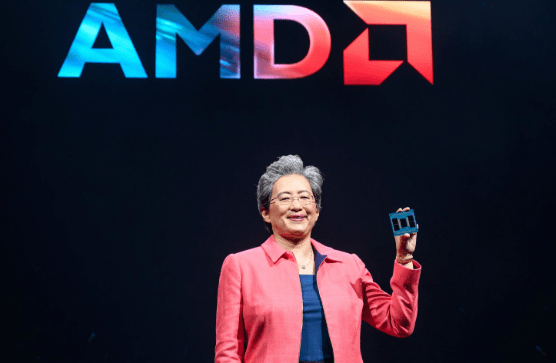
AMD and OpenAI signed a multi-year anchor deal. OpenAI naming AMD a core compute partner for 6 gigawatts of AI infrastructure, starting with MI450 in H2’26, upgrades AMD’s AI story from “credible #2” to “platform supplier with contractual runway.” It doesn’t juice 2025, but it meaningfully raises both the floor and the ceiling for 2026–2027. Yes, there are warrants (potential dilution), but they only vest if AMD actually delivers racks and the stock clears price hurdles. Net-net: higher duration, better visibility, and a cleaner path to margin mix improving as the newer parts ramp.
Here’s how I’d frame it. Short term first. Nothing in this release fixes next quarter. The first 1 GW only starts deploying in H2’26, and it’s tied to MI450, i.e., post-MI355X. So the near-term P&L still lives on the MI355X ramp, EPYC mix, and getting gross margin back to the ~54% run-rate ex one-offs. What does change now is backlog confidence: the Street loves contracted demand with named logos, and this is as blue-chip as it gets. It also helps pricing power and priority allocation on constrained parts (HBM + CoWoS) because suppliers know where the boards are going. Expect sentiment and multiples to react faster than revenue does.
Medium and long term is where this hits. A 6-GW, multi-generation framework says two things out loud: (1) AMD’s silicon + software + rack design are good enough for frontier-class production, and (2) OpenAI wants a real second source for years, not quarters. That’s platform validation. It pushes AMD further away from “component vendor” and toward “AI systems provider,” which is where sustainable margins live. Pair this with ROCm’s faster cadence and the ZT Systems design team, and you’ve got a believable route to rack-scale deployments in ’26–’27 instead of just board sales.
The warrants? They’re not nothing, up to ~160M shares is roughly ~10% potential dilution. But they’re performance-based: tranches vest when OpenAI scales purchases up to 6 GW and when AMD’s stock clears price gates (there’s even a $600 tranche). Translation: dilution only happens if the business is much bigger and the stock is much higher. Management calling the deal “tens of billions” and EPS-accretive (non-GAAP) suggests AMD believes the operating leverage and pricing more than cover the share issuance. Investors usually accept “dilution that prints cash.”
There are still real execution risks. Supply is the boss, HBM and advanced packaging gate everyone. Bring-up at rack scale isn’t trivial; MI450 has to land on time, with ROCm staying stable and performant across training and inference. And remember, this deal isn’t exclusive. Nvidia is simultaneously throwing an ocean of Blackwell at the same customer. None of that changes, but the difference now is that AMD’s runway with OpenAI is contracted and multi-gen, not hand-wavey.
I’d explicitly add a timing table (2025: minimal; 2026: H2 kickoff; 2027: fuller run-rate), call out performance-based dilution vs. accretion, and make the thesis about duration and mix more than near-term beats. The core takeaway: this doesn’t make the next two quarters easy, but it materially improves the medium-term setup and gives AMD the kind of customer proof point that tends to pull in more hyperscalers and sovereign AI programs. If AMD executes MI355X -> MI450 on schedule and keeps GM in the mid-50s, this is the catalyst that can drive multiple expansion, not just higher sales.






 Investment Gems
Leave a comment