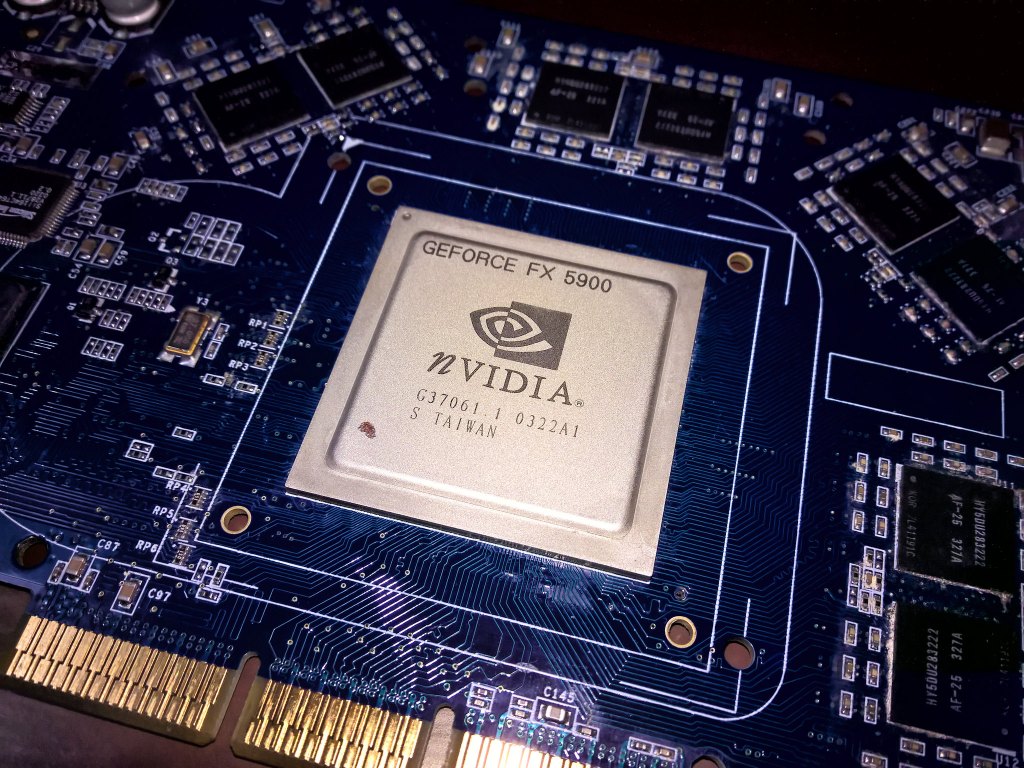
How control of constraints becomes the new moat, and why NVIDIA behaves like an industrial planner
A brief essay
For most of the last twenty years, the big constraint in tech wasn’t physical. It was software and distribution. Who had the users, who had the developers, who owned the workflow, who owned the API surface area. Compute felt basically infinite, capital was cheap enough to pretend it was infinite, and scaling looked like hiring more people, spinning up more instances, shipping more features.
AI messes with that, and not because it’s “bigger” in some abstract way. It messes with it because it drags the digital economy back into the physical world. Suddenly the thing you’re trying to scale isn’t just lines of code. It’s throughput. And throughput has a nasty habit of running into real-world limits.
That’s the part I think the market is still digesting. The defining feature of this era isn’t intelligence. It’s output per unit of time, and output per unit of electricity. Once you frame it that way, you start noticing how many choke points sit underneath the glossy “AI” label. Power, transmission, transformers, switchgear, cooling, land, permitting, skilled labor, memory bandwidth, advanced packaging, optics, financing. It’s a long list, and the list keeps changing as the system scales.
So the bottleneck economy is basically this: value flows to whoever controls the constraints, and whoever can take a messy sequence of dependencies and turn it into something predictable enough to monetize. And once you really internalize that, NVIDIA stops looking like a chip company that happens to be on a hot cycle. It starts looking like the entity coordinating a new kind of industrial buildout.
People throw around “AI factory” like it’s marketing. But if you squint at what’s actually happening, it’s not a metaphor. Training runs and large-scale inference are closer to manufacturing than they are to traditional software. You feed in electricity, silicon, memory bandwidth, networking, cooling. You run a process that’s basically compute cycles and orchestration at scale. You get outputs that show up as tokens, models, decisions, labor substituted, new products. It has all the features investors used to associate with heavy industry, just wrapped in clean rooms and data halls instead of smokestacks.
And that matters because manufacturing has two properties that “software multiple” instincts aren’t built for. One, it is capital intensive. Capex and depreciation are not rounding errors. Two, it is constraint driven. Physics and permitting are not “execution issues,” they are the business.
Once you’re in that world, advantage starts to look different. It’s less “we had the better idea” and more “we removed the next choke point before everyone else even realized it was the choke point.”
This is where the valuation framework changes too. In the old cloud era, capacity felt additive. You bought servers, added racks, kept scaling. The limiting factors were mostly people and money. In AI infrastructure, it’s not additive in the same way because the build is sequential. You need the interconnect. Then you need substations and the right electrical gear. Then you need data halls that are actually ready for the density you’re targeting. Then you need the GPUs and the memory and the packaging to show up. Then you need the optics. Then you need integration, software stack readiness, onboarding, utilization ramp. If any one link is missing, the whole timeline slides to the right.
That’s why so many infra stories feel perpetually “almost there.” Not because the teams are incompetent, but because the project is a chain and the chain only moves as fast as the slowest part. In a world like that, “capacity” as a headline number is almost meaningless. The market ends up caring about energized, commissioned, rack-ready capacity that can actually be filled. Schedule risk is valuation risk.
Now, bring this back to NVIDIA. CUDA is obviously a moat, and it has been. But I think the deeper reason NVIDIA’s dominance has stayed dominant is that they don’t just win on the chip. They win by managing the system’s choke points. They keep doing this thing where they spot the next constraint early, secure it, and then force the ecosystem to line up behind their roadmap.
That’s what an industrial planner does. They forecast demand, map constraints across the supply chain, lock long-lead items, set standards everyone has to comply with, coordinate the build so the whole thing can scale. NVIDIA does that, not with factories in the old sense, but with reference architectures, platform requirements, supply commitments, and then an ecosystem that gets pulled into alignment because if you want to ship at scale, you end up building “the NVIDIA way.”
In a bottleneck economy, the planner captures rent because the planner defines what compatible means. If you’re downstream of the planner, you can have great products and still find yourself gated by someone else’s timeline.
The other thing that trips people up is the market’s obsession with single-variable stories. “GPUs are scarce.” Sure. But scarcity rotates. As you scale, the bottleneck moves.
Power is the obvious baseline. Not just that power exists in the world, but that it can be delivered to your specific site, with a real interconnect agreement, on a timeline that survives reality. That’s why queues for megawatts matter so much. They are hidden backlogs for AI deployment. When you hear people say “we’re early,” half the evidence is sitting in grid queues and transformer lead times.
Then you run straight into the electrical gear itself. Transformers and switchgear and substation components are not things you magic up with a purchase order. Lead times are long, supply chains are constrained, and grid upgrades get political fast because they’re local and regulated and contwsted. You can have GPUs on order and land under contract and still be stuck because you can’t get the physical equipment to energize the site.
Then you hit memory and packaging. HBM is not a side detail. For modern accelerators, bandwidth is oxygen. If HBM supply is tight, you can have “GPU silicon” and still not ship complete, usable systems. Same story with advanced packaging capacity. This is one reason platform leaders keep taking share even when competitors exist. Competing isn’t just designing a chip. It’s delivering an end-to-end system at scale, reliably, for years, through rotating bottlenecks.
Than the bottleneck moves into networking and optics. As clusters get larger, networking stops being a line item and becomes existential. You need more east-west traffic capacity, higher bandwidth fabrics, and suddenly transceivers and optical supply inputs matter in a way most tech investors aren’t used to thinking about. If the optics supply chain tightens and someone locks up the scarce parts early, they don’t just get components. They control deployment velocity. That’s another form of moat.
Permits are a whole separate category of constraint, and it’s one markets always underprice until the first moratorium hits. Data centers at scale look like grid stressors, water users, land-use externalities. Communities push back. Regulators slow things down. The pattern tends to be nonlinear. It’s permissive until it suddenly isn’t. When that happens, the value of sites that already have permits, power, and connectivity jumps overnight.
Cooling and density are another quiet constraint multiplier. Higher-density racks change everything. Liquid cooling readiness stops being a feature and becomes table stakes. Water constraints and thermal realities start shaping geography. The “where” matters, and the “how built” matters, not just the “how many MW.”
And then there’s the invisible bottleneck nobody wants to talk about when the tape is strong: capital. In a low-rate world, money is plentiful and the constraints feel mostly physical. In a higher term premium world, money becomes the constraint that decides which physical plans actually get built. That’s when the market splits AI into two categories in a hurry: the self-funders who can build through any tape, and the capital-dependent builders who trade like credit spreads.
This is also why the AI cycle won’t look like a normal semi cycle. Old cycles often ended the same way. Overbuild, glut, price collapse. Bottlenecks disrupt that pattern because supply can’t flood the market quickly. Power, grid equipment, packaging, optics, permits, all of it slows the build. So the cycle tends to last longer. Pricing power tends to last longer. That doesn’t mean there are no drawdowns, it just means the underlying structure is more like infrastructure than it is like a normal product cycle.
If you want to see NVIDIA’s playbook, it’s something like: figure out where the system is going next, map what has to be true for the system to deploy at scale, secure the long-lead scarce stuff before it’s obvious, publish standards that make the rest of the ecosystem build around your assumptions, then ship as a platform so customers can buy outcomes, not parts. Then do it again when the bottleneck rotates.
Once you start thinking this way, the investment map changes. It becomes less about who has the coolest demo and more about who owns the bottlenecks. Power-ready sites. Grid equipment. Memory bandwidth and packaging ecosystems. Optics and interconnect. Permitted land. The companies that can coordinate and standardize the stack. The trust layer too, because constraints show up in compliance and governance as soon as agents and models touch real systems.
On the other side, the businesses that struggle are the ones that look like commodity compute renters without a real constraint advantage, the ones that don’t have a power edge, don’t have a deployment edge, don’t have a financing edge. Seat-tax software that can’t reprice as agents reduce human seats. Overlevered builders whose equity is basically a credit instrument.
If you want a practical dashboard for this worldview, you watch the quiet stuff. Interconnect queues and energization timelines. Transformer and switchgear lead times. HBM and packaging allocation chatter. Optics tightness. Permitting delays and local moratorium headlines. Term premium and long-end real yields, because those decide whether capital-dependent builders can breathe. And the structure of contracts, take-or-pay, upfront cash, capex sharing, because that tells you who is actually bearing the constraint risk.
When those indicators tighten, bottleneck owners gain pricing power. When they loosen, the market re-rates downstream players and punishes anyone who assumed scarcity was permanent.
None of this is risk free. Industrial planning can overreach. You can lock up the wrong thing. You can plan for demand that doesn’t show up. You can carry fixed costs that turn into burdens. NVIDIA has been so effective because its planning function has been anchored to real, expanding demand and a platform position that keeps the ecosystem aligned. If that demand falters for macro reasons or ROI reasons, the planner model shifts from rent capture to cost center. But even then, the bottleneck structure matters. Supply is slow by nature, so demand can cool and the system can still stay tight.
So yeah, the mental shift is simple but it changes everything. AI isn’t primarily a software story. It’s a throughput story. Throughput is governed by constraints. And in a world where constraints are the moat, NVIDIA starts to look less like a beneficiary of a trend and more like the entity shaping the conditions for the trend to exist at scale.
If you want to invest in this era, the question is who controls the next constraint, who can turn sequential delays into predictable monetization, and who can finance through the cycle when term premium bites. The winners will answer those questions with assets and execution, not slogans.






Leave a Reply