
In a recent radio interview on the U.S. banking crisis, I talked about the urgent need for banking business models to adapt to the lightning-fast pace of real-time settlements. Why? Because in this age of social media and digital banking, when bank runs happen, they happen at a pace that’s almost surreal. It is no longer a matter of days, it has become a matter of hours.
Enter FedNow, a term that’s been floating around since the FED trademarked it back in 2008. It’s a concept that’s been welcomed with open arms by many, but I can’t shake the feeling that it might exacerbate matters in the event of a bank run.
FedNow is not some futuristic precursor to a Central Bank Digital Currency (CBDC). Far from it. It’s an upgraded version of the existing fedwire system, a leap from the 1980s technology. A long-overdue upgrade, if you ask me.
But let’s be clear: FedNow is NOT a CBDC. It’s a new way to transfer deposits, operating 24/7/365. It’s not programmable, it doesn’t support cross-border transactions, and it’s limited in its use. Critics have raised concerns about privacy, but these are more about control than technology.
Now, here’s where things get interesting. Payment technology like stablecoins has outpaced FedNow. They’re programmable, global, and represent a modernized, unregulated dollar system. It’s a fascinating echo of the Eurodollar market that began in the Cold War era, a time when the Soviet Union, fearing U.S. intervention, began depositing its dollar reserves in European banks.
The British, ever the pragmatists, saw an opportunity to keep tabs on Soviet financial activities. The FED, in a move that still baffles, chose not to restrict offshore banks from holding U.S. dollar balances. A decision that fostered global trade but led to the FED losing control over the offshore U.S. dollar market.
Fast forward to today, and we find ourselves in a situation where the FED’s stance on stablecoins seems like a glaring misstep. Stablecoins are the latest incarnation of Eurodollars, and the FED’s reluctance to regulate them is puzzling, to say the least.
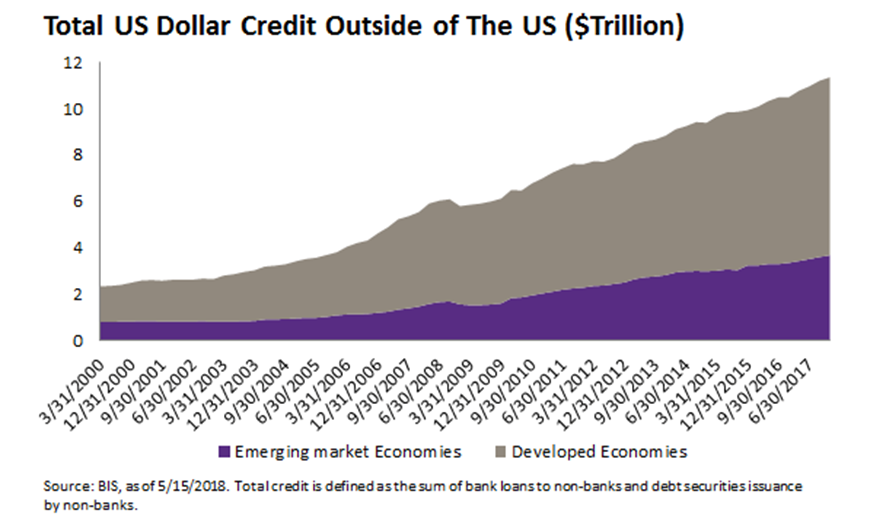
(Source: JPMorgan)
Entities like Tether now operate entirely offshore, beyond the FED’s control. Some might argue that this is intentional, that the FED is biding its time, planning to eclipse stablecoins with its own CBDC. But that’s a simplistic view.
The clues from the past tell a different story. If the FED goes down that path, the international market will ensure the second coming of the Eurodollar market. The market will always gravitate towards convenience and flexibility. And frankly, I doubt that the bureaucrats, already lagging with their ’90s-esque FEDnow, can match the nimbleness and creativity of the rest of the world.
In the grand tapestry of global finance, these threads weave a complex pattern. The FED’s actions, or lack thereof, with stablecoins are not just a footnote in history. They’re a signpost, pointing to a future where the lines between traditional banking, digital currencies, and global economics become increasingly blurred. And, at the same time it is a glimmer of hope for the Bitcoin libertarians that fear that a CBCD will bring an Orwellian future.






Leave a Reply